Corduroy pants for men: wale, fit, and how to wear them
The fall pant jeans forget: what wale count means, how cords should fit, what to pay, and three ways to wear them without the 70s thing.
October 13, 2026 · 5 min read

Corduroy is the pant fall was built for, and most guys still skip it because the last pair they noticed was on a geography teacher in 2009. A good pair of cords runs $50 to $120, is warmer than jeans, softer than chinos, and looks more expensive than either in the same outfit. It's also the easiest way to add texture in a season when everything you own is flat cotton and denim.
The whole trick is three things: the wale, the weight, and the fit. Get those right and the geography teacher never shows up.
Wale is the number that matters
Corduroy is cotton woven with extra threads that get cut and brushed into raised ridges. The ridges are called wales, and the wale count is how many fit in one inch of fabric. Brands bury it, but it's the number that matters most.
Pinwale, 16 wales per inch and up, is fine and flat and reads almost like a brushed chino from across the room. It's the dressiest version and the one that works under a blazer. Standard, 10 to 14, is what most pairs are. Wide wale, 8 and under, is the big 70s rib. Heavy, warm, and the one you wear with a hoodie, not a shirt and tie.
If you're buying one pair, buy standard. An 11 wale works with everything in your closet.
Weight matters almost as much. Corduroy runs from around 8 oz, which flattens and shines at the knees within a season, to 14 oz and up, which stands on its own and is too warm for anything past April. The 10 to 12 oz middle is the fall pant. Rub the fabric between your fingers in the store: good corduroy springs back when you press the ridges down. Cheap corduroy stays pressed.
How they should fit
Corduroy is stiffer than chino twill and doesn't stretch unless the label says so, so a cut that works in your chinos can pull in cords. The four chino fit checks all apply here, plus three that are corduroy-specific:
- Skip the slim fit. The pile makes your legs look about an inch thicker than they are, and a slim cord pulls across the thigh and shows a horizontal shine line within weeks. Straight or relaxed straight is the move.
- No break, or a quarter inch at most. Cords are heavy enough that a stack of fabric at the ankle turns into a puddle. Hem them to sit right at the top of your shoe. If the pair comes long, a tailor takes it up for $15 to $20.
- Rise at your natural waist or just under it. A low-rise cord in a thick fabric is exactly where the dad look lives.
Try them on sitting down. Cords that fit standing up can grip the back of your thigh in a chair.
Colors: start with tan or brown
Your first pair should be tan, camel or a mid-brown. These do the job navy chinos do in summer: they go with every top you own and read as a choice instead of a default. Olive is the second pair. Dark navy and charcoal are fine but quieter, and they lose the thing that makes corduroy worth buying, which is that it looks warm.
Burgundy, rust and forest green are the fun ones. Great as a third pair, risky as a first.
What to buy at each price
Around $50: Uniqlo's corduroy pants are the pick. Standard wale, honest weight, a straight cut that doesn't pull. Gap and Levi's both sell cords in the $70 to $90 range and discount them constantly, so you rarely pay list.
Around $100: J.Crew's corduroy in the 770 straight fit is the step up. Heavier fabric, a better wale, and it ages well instead of going flat. L.L.Bean sits in the same range and is built to be worn hard.
$150 and up: Buck Mason, Alex Mill, Todd Snyder. You're paying for Italian or Japanese fabric, a cut that doesn't need a tailor, and a pile that stays up for years. Worth it once cords become a twice a week pant. Not worth it for your first pair.
Secondhand is unusually good for corduroy. The fabric lasts long enough that a $12 pair at Goodwill is often a $120 pair from a decade ago, already broken in. The secondhand guide covers what to check before you buy.
How to wear them without the 70s thing
Corduroy is already the textured piece. The rest of the outfit stays quiet, and that's the whole rule.
With a sweater. Tan cords, a navy or charcoal merino crewneck, white tee at the collar, leather boots or loafers. This is the fall outfit that covers a date, a dinner, or a Friday office. It's also the one that makes the cords look expensive.
With a hoodie. Brown or olive cords under a grey heavyweight hoodie and clean white sneakers. This is where wide wale lives. Keep the hoodie plain and the sneakers white and it looks intentional instead of lazy.
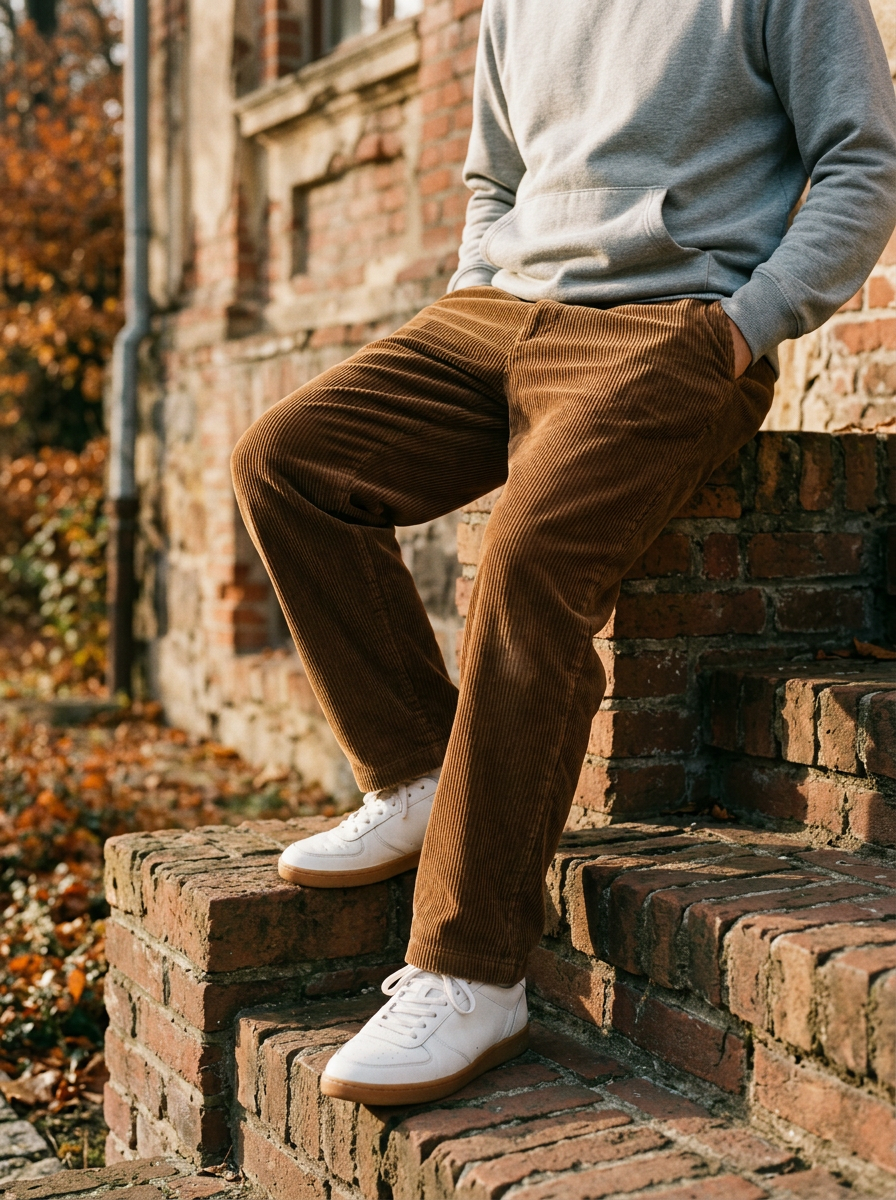
Under a jacket. A denim trucker, a chore coat or a waxed jacket over a plain tee or an oxford, cords on the bottom. Just don't stack corduroy on corduroy. If the jacket is cord, the pants aren't. The overshirt guide says the same thing for a reason.
Shoes: brown boots, loafers or suede chukkas make cords look dressed. Sneakers work with brown and olive, but keep them white and plain.
Keeping the pile alive
Corduroy wears out in two places: the knees and the seat, where the pile gets crushed flat and starts to shine. Three habits slow that down. Wash inside out, cold, and never use a hot dryer; tumble low or hang. Don't iron the face of the fabric, since an iron flattens the pile for good; steam them, or iron inside out over a towel. And after washing, brush the ridges with your hand in the direction of the nap to stand them back up.
A good pair lasts five or six falls. Cheap corduroy makes it through one.
Buy one pair of tan, standard-wale cords this week, hem them to no break, and wear them with the darkest sweater you own the first morning it's under 55.