How clothes should fit: the three checks that settle everything
Shoulder seam, trouser break, taper. Get those three right and cheap clothes look expensive. Get them wrong and no label can save you.
July 12, 2026 · 2 min read
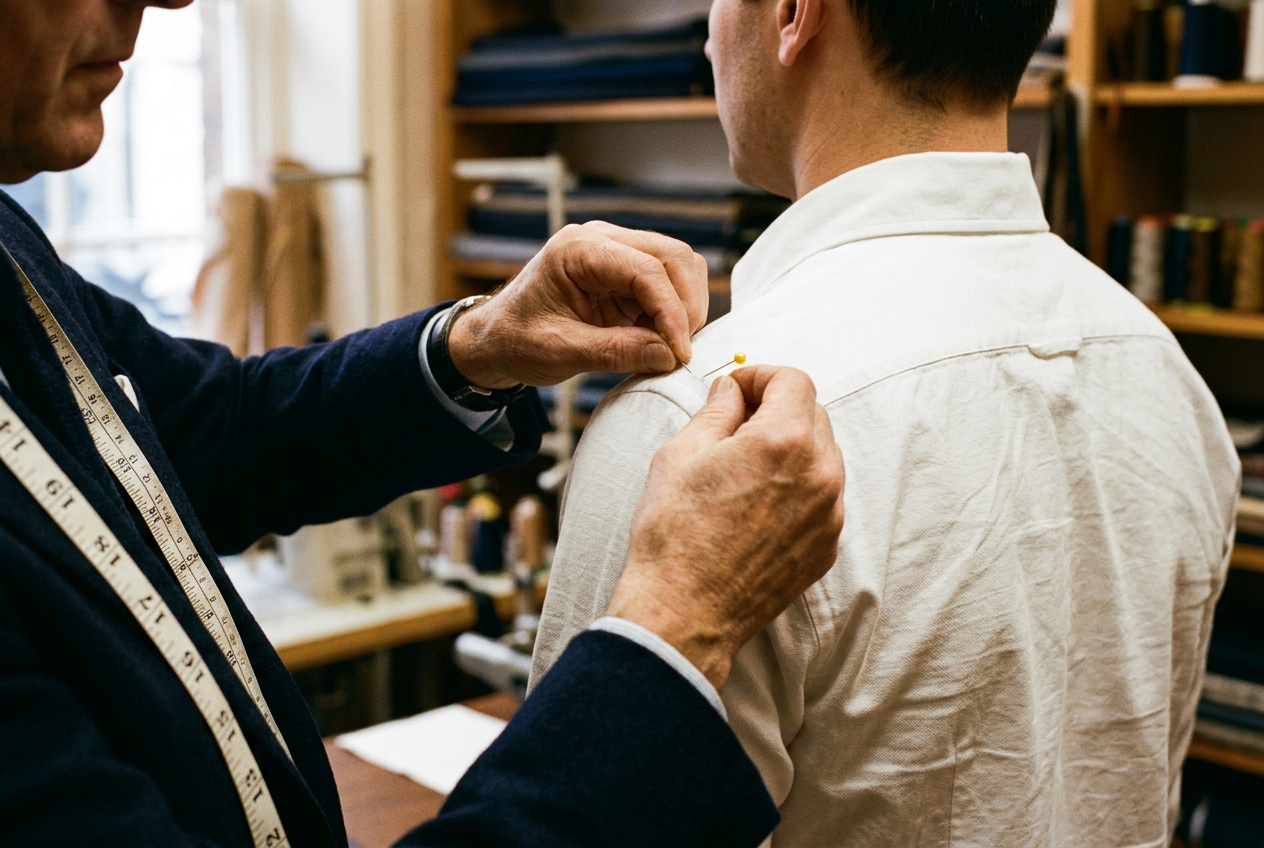
Put a $40 shirt that fits next to a $400 shirt that doesn't and the $40 shirt wins every single time, on everyone, in every photo. Fit is the whole ballgame. Brands know you don't believe this, and their margins depend on you not believing it.
The good news: you don't need to learn tailoring. You need three checks, and two of them take five seconds in a mirror.
Check one: the shoulder seam
Find the seam where the sleeve meets the body. On a shirt, jacket or overshirt that fits, that seam sits right at the corner of your shoulder, the bony point where your arm starts.
Seam hanging past the bone: the garment wears you, everything looks borrowed. Seam gripping inside the bone: X-ray tension lines across the chest and that permanent about-to-Hulk-out look.
Check the shoulders before anything else in the fitting room, because this is the one thing no tailor can reasonably fix. Waists come in, sleeves come up, hems rise. Shoulders are surgery. If the shoulder is wrong, put it back no matter how good the price is.
Check two: the break
The break is where the trouser hem meets the shoe, and it sets the entire mood of the lower half.
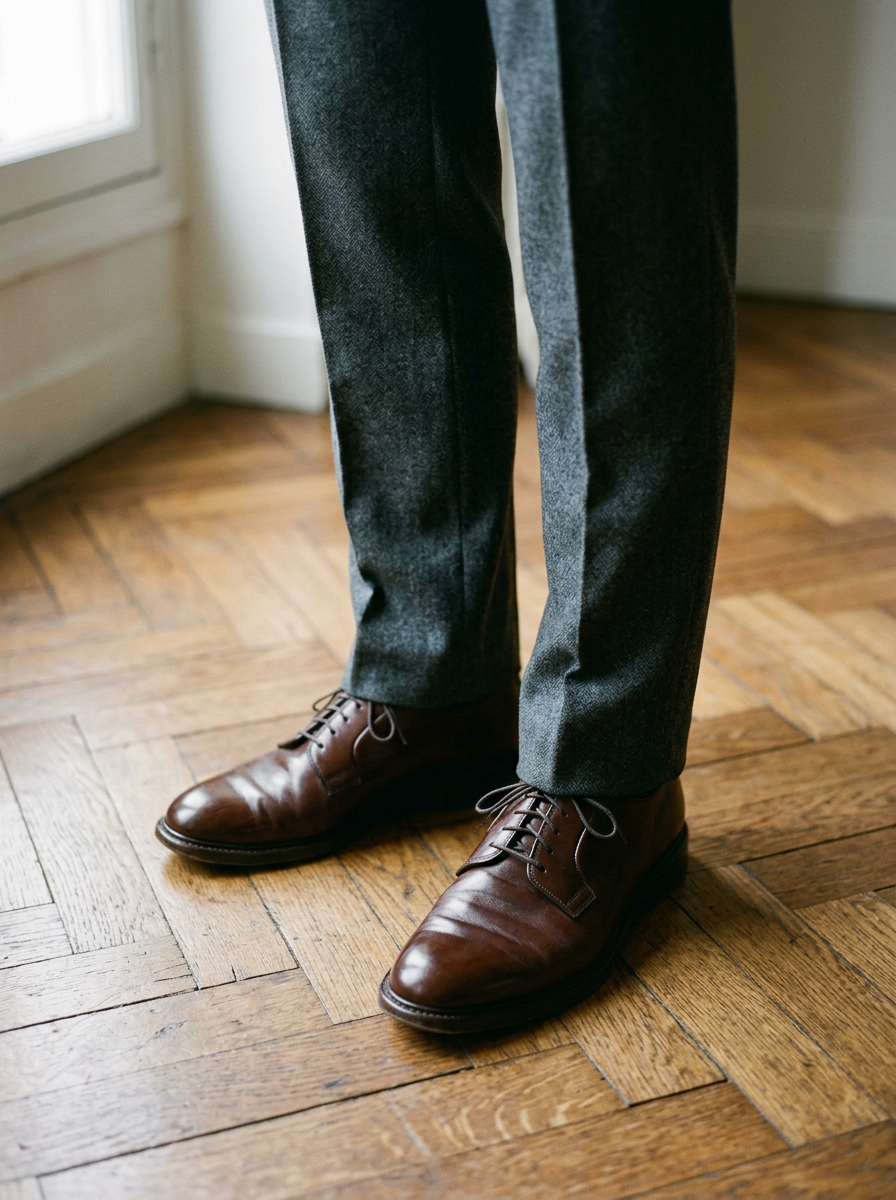
Full puddle of fabric: dated, shortens your legs, collects the sidewalk. No break with visible ankle: fashion-forward, fine in summer, a choice in winter. The current sweet spot for most guys is a slight break or none: hem just kissing the shoe, one shallow fold at most.
A tailor sets this for about $15, which makes it the highest-leverage $15 in menswear. Every pair of trousers you own should have been hemmed for you, not for a mannequin.
Check three: the taper
Room where your body is, taper where it isn't. Trousers should give the thigh space to sit without gripping, then narrow toward the opening so the silhouette has a direction. The leg opening should shadow the shoe, not swallow it.
Same idea up top: a tee or shirt gives the chest room, then follows in at the sides instead of billowing. This is what people mean by drape, the thing we keep coming back to in the old money look. Fabric that skims looks expensive. Fabric that clings or balloons looks like a size mistake in either direction.
The fitting room ritual
Thirty seconds, four moves: sit down, reach overhead, cross your arms, look back at the mirror once. If the shirt escapes the waistband, the shoulders bind, buttons strain, or the seat grips, it fails. Clothes are for moving. A fit that only works standing still is a costume.
And the tape measure trick that saves you online: take the one shirt and one pair of trousers that fit you best, measure them flat, and buy against those numbers instead of the size on the label. Sizes lie across brands. Your best shirt doesn't.
Three checks, one ritual, a $15 hem. That's the entire skill, and it outperforms any amount of money spent on labels.