Linen wrinkles. Wear it anyway.
The fabric that keeps you alive in July comes with a catch. How to pick linen that rumples instead of creases, and why crisp was never the goal.
June 17, 2026 · 3 min read
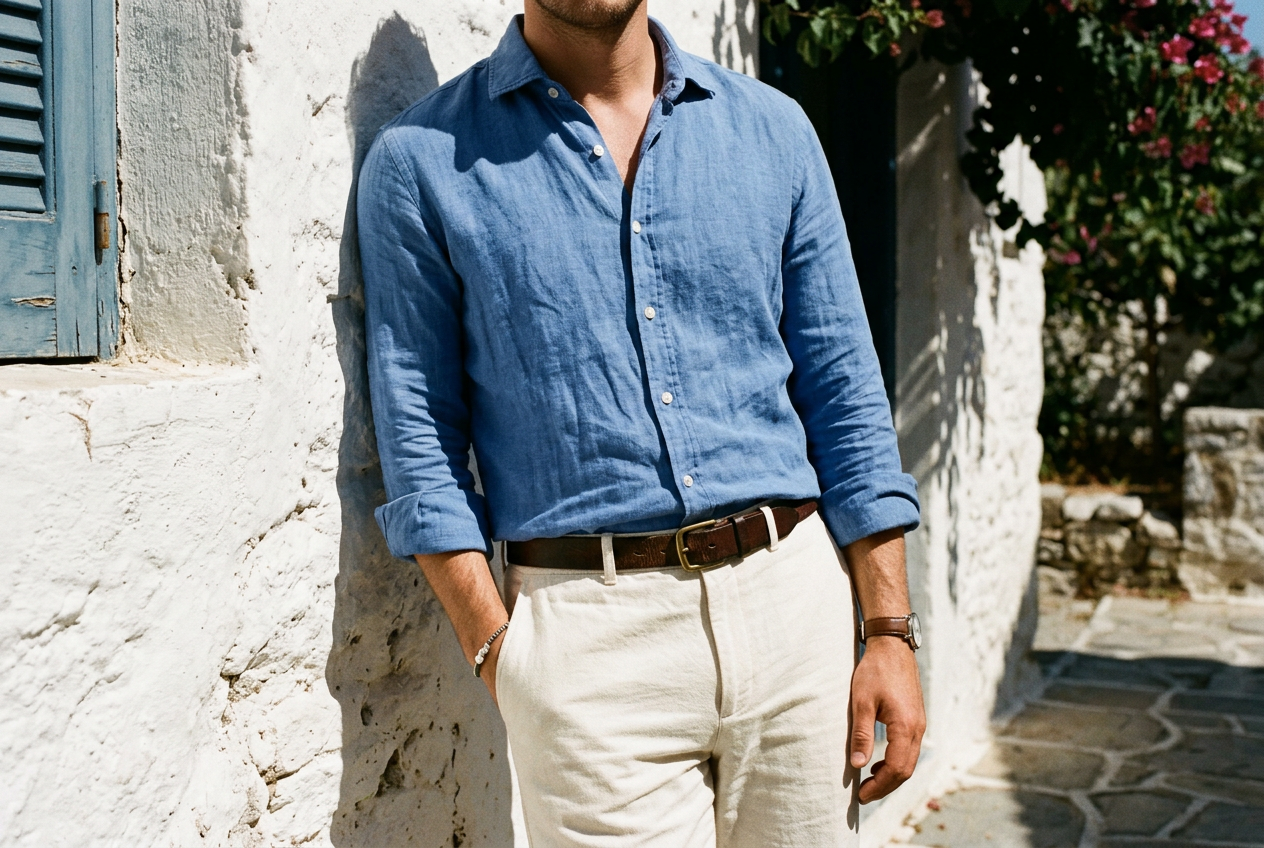
Every June the same argument breaks out in group chats and menswear forums: linen wrinkles too much, linen is the only thing keeping me alive, linen looks sloppy, linen is the whole point of summer. Everyone is right. Here's how to be on the winning side of it.
Why linen wins summer anyway
Linen fibers are hollow. That's the entire magic trick. The fabric pulls moisture off your skin, dries fast, and lets air move through the weave, which is why a linen shirt at 95 degrees feels survivable while the same shirt in cotton feels like a wet towel.
No performance fabric has really beaten it. The techy golf-polo stuff wicks sweat, sure, but it also clings, shines, and smells by 2 p.m. Linen just quietly does its job and looks better doing it.
The reframe: crisp was never the goal
Here's the mental switch that fixes everything. A linen shirt is not a dress shirt that failed. It's a different garment with a different finish line.
Pressed linen at 8 a.m. becomes softly rumpled linen by 10, and that lived-in surface is the look. Stylists call it texture. Your grandfather called it summer. Nobody who knows clothes looks at gentle linen wrinkles and thinks unkempt.
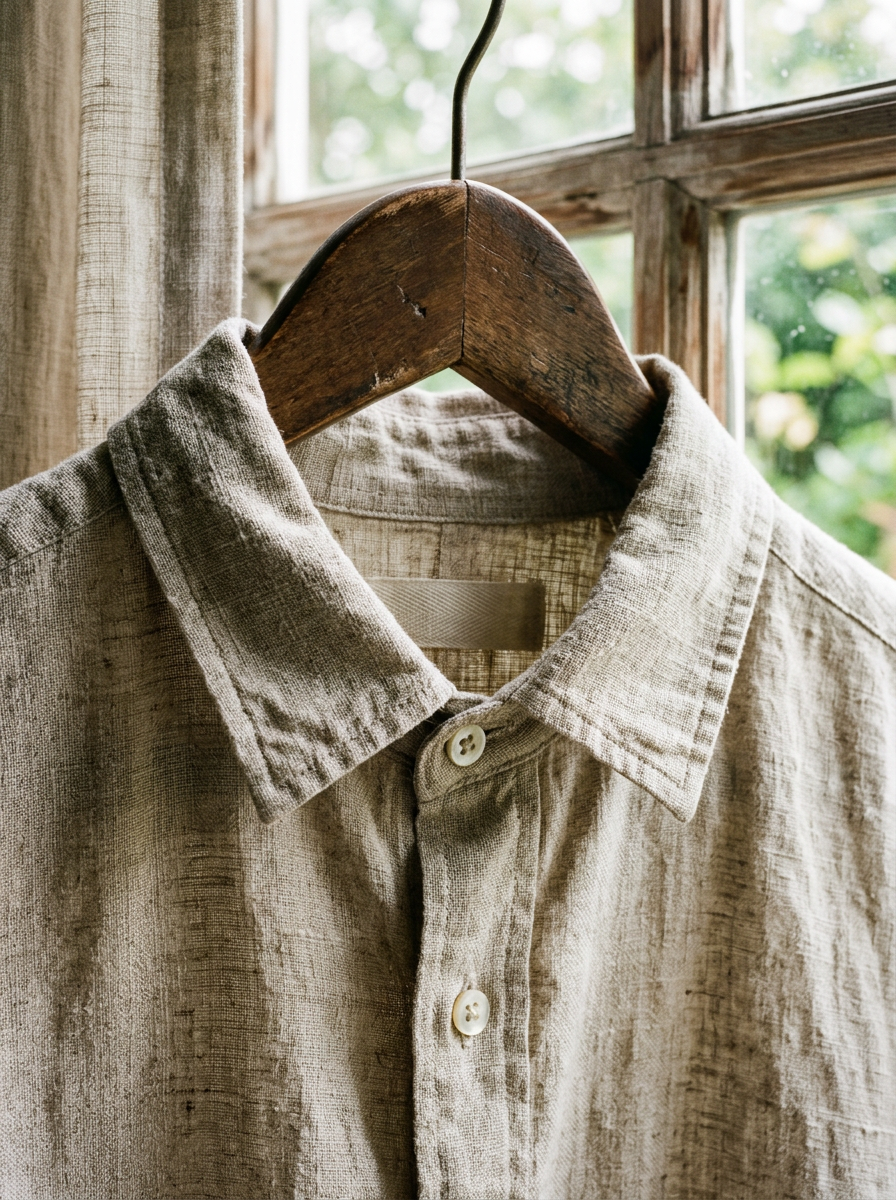
The wrinkles that DO look bad are the sharp, creased kind, and those come from two specific mistakes: buying linen that's too thin, and machine-drying it into origami. Both are avoidable.
Buy heavier than you think
Cheap linen is thin linen. It creases like receipt paper, goes see-through in sunlight, and it's the reason people swear off the fabric entirely.
Look for shirts in the 180 to 230 gram range. You can't always find the weight on the tag, so use the hand test: scrunch a sleeve hard for three seconds and let go. Good linen springs back with soft folds. Bad linen holds the crease like it's proud of it.
Portuguese and Irish mills supply most of the good stuff. In practice that means brands like Uniqlo's premium linen line at $40 (genuinely great for the money), Portuguese Flannel, and basically anything that says "washed linen" on the label, because the washing pre-softens the fiber.
The blend escape hatch
If you cannot make peace with wrinkles, don't quit the fabric. Blend it.
Linen-cotton keeps most of the airflow and behaves close to a normal shirt. Linen-viscose drapes heavier and reads dressier, which is why unstructured summer suits are so often that mix. We covered the summer suit version of this in the wedding guide, and the same logic applies head to toe: blends for tailoring, pure linen for shirts.
Care, the two-minute version
- Wash cold, gentle cycle. Linen actually gets softer and better with every wash.
- Pull it out of the machine slightly damp and hang it on a real hanger. Gravity is your iron.
- If you must press, iron the collar, placket and cuffs only. Sharp edges where structure matters, soft everywhere else.
- Never tumble dry on heat. That's where the origami comes from.
Where linen doesn't belong
An interview. A funeral. Anywhere the invitation says formal. And honestly, any situation where you'd worry about it, because worrying reads louder than wrinkles.
Everywhere else between May and September is fair game. Wear it to dinner, wear it to work if your work is even slightly relaxed, wear it to the airport and thank us at baggage claim.
Rumpled on purpose beats pressed and miserable. That's the whole philosophy.