The flannel shirt guide: weight, fit, and how to wear it
Flannel is a fabric, not a pattern. How heavy it should be, how it should fit, and three ways to wear it this fall.
September 25, 2026 · 4 min read

Flannel season starts the first morning you walk outside and your t-shirt suddenly feels like a mistake. For most of the US that's right about now. And a good flannel shirt might be the easiest fall buy there is: $40 to $90, goes with the jeans you already own, and works tucked, untucked or open over a tee.
The catch is that flannel covers a huge range, from thin $15 shirts that pill after three washes to thick brushed cotton that lasts ten years. Here's how to tell them apart.
Flannel is a fabric, not a pattern
People say "flannel" and mean plaid. They're different things. Flannel is a fabric: usually cotton (sometimes wool) that gets brushed after weaving so the surface fuzzes up. That brushed nap traps air, which is why it feels warmer than a regular shirt of the same weight.
Plaid is just the pattern. You can have plaid poplin that isn't flannel at all, and solid flannel in plain grey or olive. Solid flannel is honestly underrated. A charcoal or navy one reads almost like a sweater and dresses up easier than any tartan.
Quick test in the store: rub the fabric between your fingers. Real flannel feels soft on both sides. Cheap "flannel" is often printed plaid on thin cotton, brushed only on the outside, and feels flat and papery inside.
Weight is the whole game
Fabric weight gets listed in ounces per square yard, and most brands bury it, but it's the single biggest thing separating a good flannel from a bad one.
Around 5 to 6 oz is a lightweight shirt. Fine for September, fine under a jacket, wears thin fast. Most mall flannels live here. Around 7 to 9 oz is the sweet spot: it holds its shape, drapes well, and works alone on a 60 degree day. Uniqlo's flannel shirt ($40) sits near the bottom of this range, and J.Crew's ($70 to $90 on sale most of the year) sits right in it. Past 10 oz you're in heavy flannel territory, closer to a shirt jacket. Brands like Flint and Tinder or Taylor Stitch ($100 to $150) live up here, and these start overlapping with the overshirt you'd layer over everything else.
If you're buying one, buy the midweight. It covers the most days.
How it should fit
Flannel is thicker than a dress shirt, so fit mistakes show more. A baggy flannel looks like a tent, and too slim pulls across the chest because the fabric doesn't stretch. The basic rules from how clothes should fit all apply, plus a few flannel-specific ones:
- Shoulder seam sits at the edge of your shoulder bone. If it's drooping down your arm, the shirt is a size too big no matter how comfy it feels.
- Hem lands around the middle of your back pocket if you plan to wear it untucked. Longer than that and it only works tucked.
- You can pinch 2 to 3 inches of extra fabric at the chest. Less than that and the buttons will pull when you sit.
- Sleeves end at the wrist bone, since you'll roll them half the time anyway.
One more thing: size for how you'll wear it. If it's mostly going over a t-shirt, open, the way most guys wear flannel, try it on with a tee under it.
Three ways to wear it that don't look like a costume
Flannel has a reputation problem. Too much red buffalo check with work boots and a beard and it tips into lumberjack costume. The fix is keeping the rest of the outfit quiet.
Open over a tee. The default. Grey or white tee, flannel unbuttoned, dark jeans, clean sneakers or boots. Pick a flannel with muted colors (olive, navy, brown, grey) and it matches with almost nothing else to think about.
Tucked, as the actual shirt. A smaller check or solid flannel tucked into chinos with a leather belt looks put together without trying. This is the one people forget. It works for a casual dinner or a Friday office that's gone business casual.
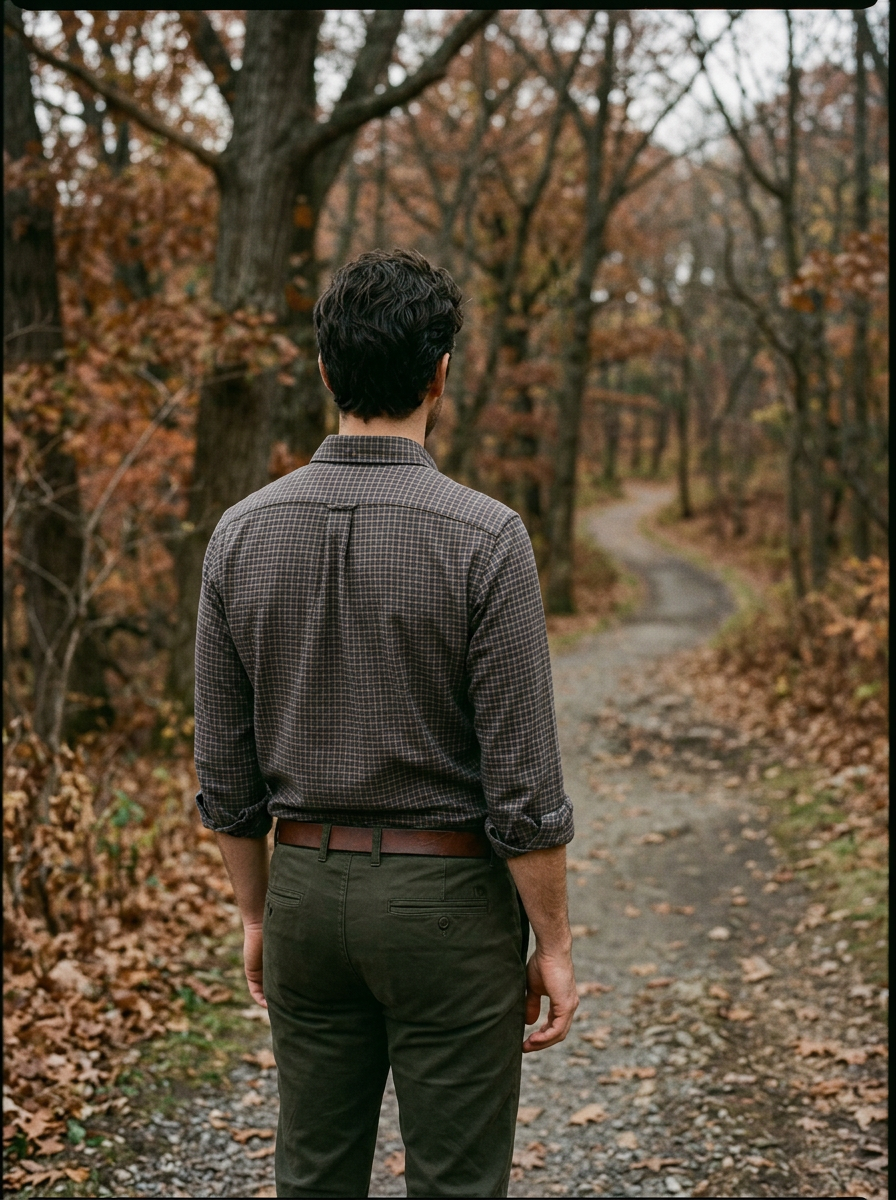
Under a jacket. Flannel under a chore coat, a waxed jacket or a trucker jacket is fall layering at its most basic. Keep the colors apart: a dark flannel under a lighter jacket, or the other way around, so the two don't blur into one brown mass. If you haven't picked a jacket yet, the fall jacket guide covers which one to get first.
Colors and patterns to start with
Your first flannel should be a muted tartan or a small check in two or three dark colors: green and navy, brown and grey, charcoal and rust. These go with blue jeans, olive and khaki chinos, and black. Classic red and black buffalo check is fine as a second flannel, but it's loud and people remember it, so you can't wear it twice a week.
Skip anything with more than four colors, anything neon, and anything where the plaid is printed rather than woven. You can spot a printed plaid by flipping the fabric over: woven plaid shows the pattern on both sides, printed is pale or blank inside.
Keeping it soft
Flannel's enemy is heat. The dryer shrinks cotton flannel and bakes the brushed nap into little pills. Wash it cold, inside out, and hang it to dry or tumble it on low for ten minutes and then hang it. That one change adds years.
Buy one midweight flannel in a dark, muted plaid this weekend, try it on over a tee before you pay, and wear it open with your darkest jeans on the first cold morning.