How to make your clothes last (the dryer is the problem)
Your dryer does more damage than wearing the clothes ever will. What to wash, how often, and the storage habits that keep things looking new.
August 25, 2026 · 4 min read

Look at the collar of your favorite t-shirt. If it is wavy and stretched while the rest of the shirt still looks fine, that damage did not come from wearing it. It came from the dryer.
Most guys spend real money upgrading what they buy and then run all of it through the same laundry routine they used in a dorm. A $12 Uniqlo tee and a $90 lambswool sweater do not want the same treatment. Here is what actually kills clothes, and what to do instead.
Heat is the enemy, and your dryer has plenty of it
A dryer does two things to fabric: it beats it against itself, and it cooks it. The lint trap is the evidence. That fuzz is your clothes, leaving in small pieces, load after load.
High heat shrinks cotton, breaks down the elastane in stretch denim and knit polos, and melts the surface of synthetics so they pill and start holding onto smell. It also wrecks the ribbed collar on a tee faster than anything else you will ever do to that shirt.
The fix is boring. Pull things out damp and hang them, or run low heat and stop the cycle early. A t-shirt air dries on a rack in about four hours. Anything with stretch in it, so jeans with 2% elastane, joggers, performance shirts, should never see full heat. Sweaters dry flat on a towel, never on a hanger while wet, because wet wool stretches and stays stretched.
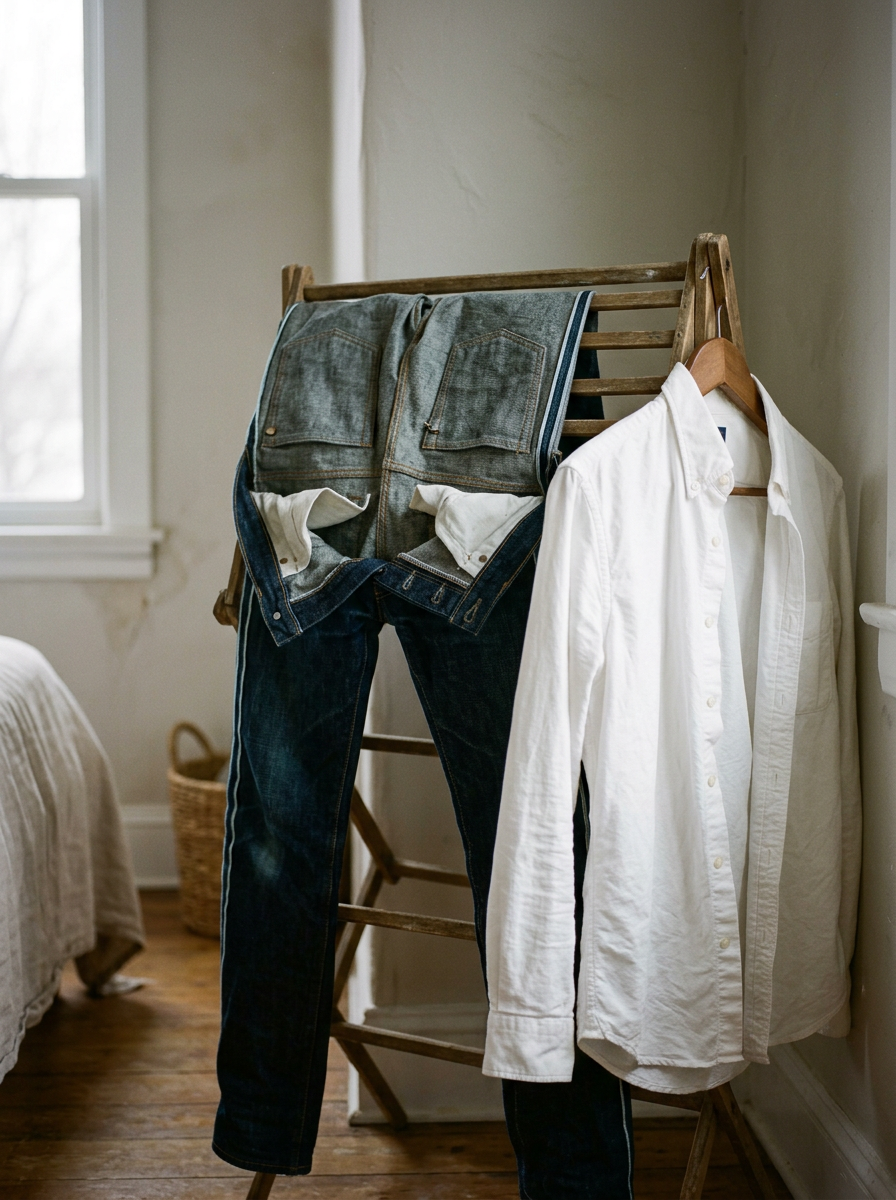
Wash less than you think
Washing is wear. Every cycle is a tumble through water and detergent, and half of what is in the machine did not need to be there.
Rough guide for how often to actually wash things:
- T-shirts, socks, underwear: every wear, no argument
- Dress shirts and oxfords: every one or two wears
- Chinos and trousers: every three or four wears
- Sweaters and knitwear: every four to six wears
- Jeans: every ten wears, or when they smell or go baggy
- Jackets and coats: two or three times a year
Jeans are where people get stuck. You do not need to freeze them, that does nothing and the myth refuses to die. You just need to wear them more between washes, then turn them inside out and use cold water when you do. Washing jeans after every wear is a big reason they blow out at the knee inside a year. If you are still hunting for the right pair, the jeans guide covers fit and where to buy.
For most of the middle of that list, airing out beats washing. Hang a worn shirt on the back of a door overnight instead of dropping it in the basket. Half the time it is ready to go again.
Cold water, less detergent, zip the zippers
Cold water cleans fine. Detergent is built for it now, and hot water is where the shrinking and fading happen. Save warm for towels, sheets, and gym clothes that have gone genuinely rancid.
Use less detergent than the cap suggests. That cap is a marketing decision. Extra soap does not rinse out, it stays in the fabric, and that residue is why towels stop absorbing and cotton tees go stiff and slightly gray. Two tablespoons for a normal load is plenty.
Turn dark clothes inside out. Fading on black jeans and black tees is abrasion on the outer face of the fabric, so flip them and the friction happens on the inside where nobody looks. Zip every zipper before it goes in, because an open zipper is a small metal saw loose in a drum with your knitwear for 40 minutes. A $6 mesh bag for anything delicate is the cheapest insurance in the house.
Linen runs the other way: it gets softer and better with every wash, which is part of why it is worth living with the wrinkles.
Pilling is fixable in about four minutes
Pills are broken fibers that tangled together instead of falling off. Loose knits and cotton blends do it most, and the trigger is usually friction from a backpack strap or a seatbelt.
A fabric shaver costs around $15 and clears a sweater in a few minutes. Lay the piece flat, keep the pressure light, let the blade do it. Do that two or three times over a sweater's life and it keeps looking new. Tighter, denser fabric pills less to begin with, which is one reason a heavier tee outlives a thin one, as covered in the white t-shirt guide.
Storage decides how things look in year three
Fold all knitwear. A hanger puts the weight of the entire sweater on two shoulder points, and that is where those little peaks come from. Sweaters, sweatshirts, anything heavy: folded, on a shelf.
Hang shirts, blazers and coats, but on wide wooden or padded hangers, not the wire ones that come back from the dry cleaner. Wire deforms shoulders slowly enough that you never notice it happening. A ten pack of decent hangers runs about $25 and it is the highest return purchase in your closet.
Wool needs one extra step. Moths are not after the wool, they are after the body oil and food traces on it, so anything going into storage for the summer gets washed or dry cleaned first and then sealed in a bin or a garment bag. Cedar helps at the margins. Clean wool is the real defense.
Next load, change one thing: pull your t-shirts out while they are still slightly damp and hang them to finish. Check the collars in a month.