Streetwear for men: what it actually is and how to wear it
Most of what gets sold as streetwear is a logo on a blank. The real thing is proportion, and it costs far less than resale prices suggest.
September 1, 2026 · 4 min read

Streetwear got flattened into a shopping category. Ask ten guys what it means and you get ten brand names, half of them resale sites. The real thing is older and a lot simpler, and once you see what it's actually built on, you stop paying $280 for a hoodie that fits worse than a $50 one.
Where it came from
Skate shops in Southern California, hip hop in New York, surf brands in between, late 80s into the 90s. The clothes were workwear and sportswear borrowed and resized: Dickies, Carhartt, Champion reverse weave, Air Force 1s. Small print runs sold out of one store. The scarcity was a side effect of a tiny operation, not a marketing plan.
Then it became a marketing plan. Weekly drops, bots, resale multiples, a logo screened onto a blank garment and priced against demand instead of construction. That part you can ignore completely and lose nothing.
Proportion is the whole trick
Streetwear reads as streetwear because of shape. Tailoring pulls fabric close to the body at every point. This does the opposite, but in one place at a time.
That's the rule: volume up top or volume down low, never both. Boxy hoodie with a straight or slim leg. Fitted tee with a wide pant. Do both at once and you look like you got dressed in the dark at someone else's house.
Numbers beat adjectives here. A relaxed pant leg opening measures around 8 to 9 inches across the hem, a wide leg runs 9.5 to 11, and a standard straight jean sits near 7.5. Check the product page, most brands list it. On top, the shoulder seam of a boxy sweatshirt should sit an inch or two past your actual shoulder, on purpose, and the hem should land at your hip bone. If it covers your fly, it's too long, and no amount of brand cachet fixes that. The rest of the fit rules still apply, and the three checks in our fit guide don't stop being true because the silhouette got looser.
The pieces that carry it
You need less than the internet suggests. Four things, and everything else is variation:
- A heavyweight hooded sweatshirt, 400 gsm or above, in black, faded navy or heather grey. Weight is what separates a good one from a gym-bag one, and it's the whole argument in our sweatshirt guide. Uniqlo U and Champion reverse weave both clear the bar under $70.
- Two pants: one dark relaxed straight jean, one pair of loose cotton trousers or nylon-blend pants in charcoal or olive.
- Boxy cotton tees, 6 oz or heavier, so they hang instead of clinging. Three of them, one white, two dark.
- One outer layer with structure. A coach jacket, a chore coat or a hooded zip-up in a flat color.
That's a full rotation for around $400 if you're patient with sales. The look does not get better past that point, it just gets more expensive.
Shoes matter more here than anywhere else
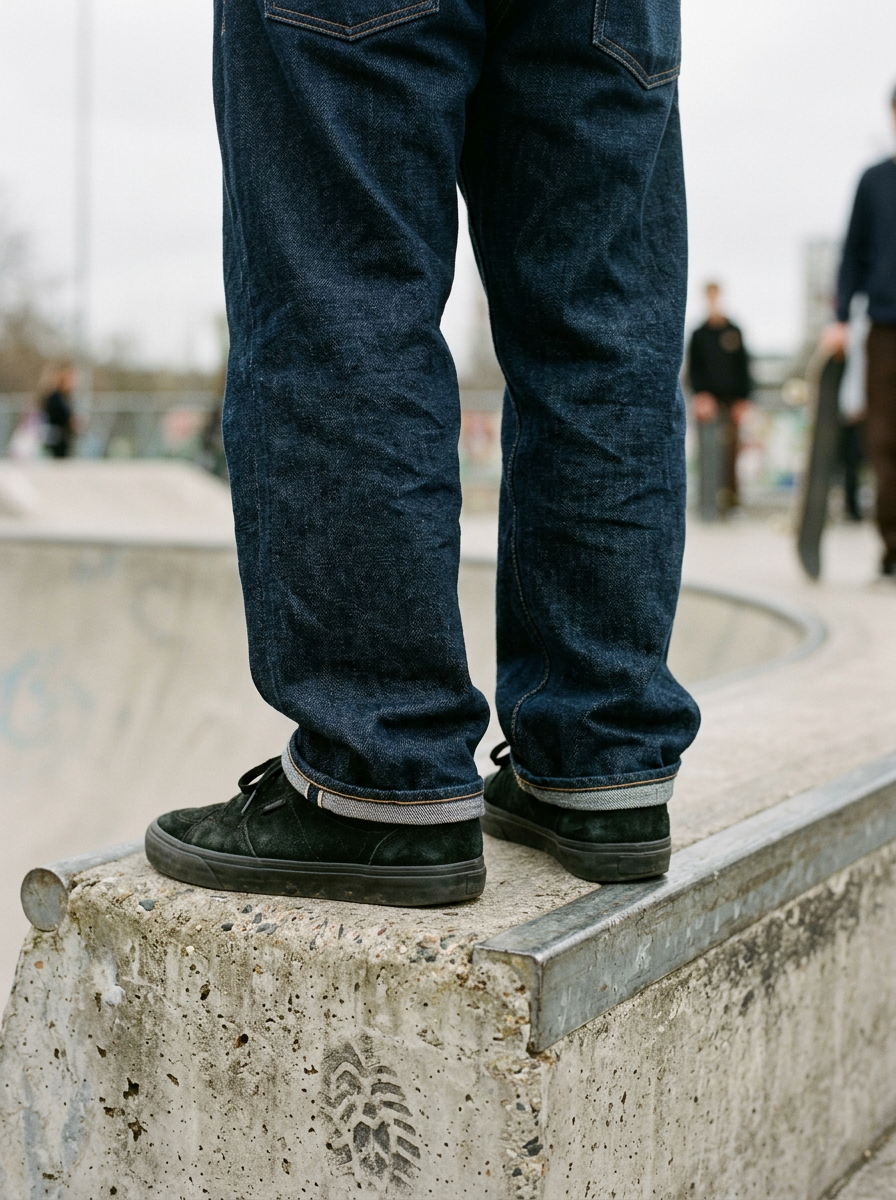
In tailoring the shoe is a finishing detail. Here it sets the proportion of the entire outfit, because a loose leg needs something with enough visual weight to land on. Thin runners disappear under a wide hem and the whole silhouette goes soft at the bottom.
New Balance 550s, Adidas Sambas and any chunky white leather trainer all work, and so does a low black skate shoe if you want the outfit quieter. Rotate two or three pairs instead of buying six, which is the same argument we made in the three-sneaker rotation. One clean pair, one beater, one dark pair for evenings.
The hype tax
Here is the part that gets people:
The resale price of a garment tells you how many people want it. It tells you nothing about how it is made.
A $400 hoodie and a $60 hoodie are frequently the same cotton, the same weight, sewn in the same country. What you're paying for is the print and the fact that it sold out. Sometimes that's a fine trade, if you actually like the graphic and you're honest that it's the graphic you're buying. It stops being fine when the expensive one fits worse, which happens constantly, because hyped pieces get bought in whatever size was left.
Spend the money on fabric weight, fit and shoes. Spend it on a tailor hemming your pants to the right length. Buy the graphic piece last, once the rest of the rotation works without it.
Try a silhouette on your own body before you commit to it. You can see how a boxy top and a wide leg read on you in the Style.it app in about a minute, which is faster than a return label.