Winter boots for men that don't look like snow gear
What actually keeps your feet warm and dry, five pairs worth buying, and how to wear them with normal jeans.
November 7, 2026 · 4 min read

Your white sneakers have about three weeks left. Then the first slush shows up, the salt trucks roll out, and you find out mesh runners have the waterproofing of a paper towel.
A winter boot fixes that, but the category is a mess. Half of it is built for ice fishing in Minnesota. The other half is a fashion boot with a waterproof sticker on the box. You want the narrow middle: a boot that handles a 20 degree walk to class or work and still looks fine at dinner afterward. We covered regular leather boots in the guide to shoes beyond sneakers. This one's for actual weather.
The three specs that matter
Ignore the marketing words on the tag. Check these instead.
Start with waterproofing. The tag should say waterproof, and water resistant means something much weaker. Then look at the tongue. It should be sewn to the sides of the boot all the way up, because otherwise slush walks right in through the laces. Plain untreated suede is out.
Next is insulation, which boots list in grams. The number is the weight of fill per square meter, so higher runs warmer, and most guys buy too much of it. 200g is right if you're moving around, walking to class or commuting. 400g makes sense for real cold, like waiting for a bus in the teens. 600g and up is for standing outside for hours. Your feet make plenty of heat when you walk, and a sweaty sock gets cold fast the second you stop.
Last is the sole. Deep lugs handle snow, but ice is a different problem, because regular rubber goes hard in the cold and slides. Vibram's Arctic Grip compound is built for wet ice. If your city spends a few weeks a year glazed over, pay for it. If you mostly get slush and rain, you can skip it.
Five pairs worth your money
These are regular retail prices. Sales are common on winter boots, so check before you pay full price.
- Columbia Fairbanks Omni-Heat, about $125 to $130. Waterproof with 200g insulation, and the obvious pick on a budget. It looks a little outdoorsy, so buy a dark color and it mostly disappears under jeans.
- L.L.Bean 8" Insulated Bean Boot, about $180 to $230 depending on the version. The rubber bottom shrugs off slush for years and the look is pure New England prep. The tread is the weak spot on ice. They also run big, and the sizing advice changes by version, so read the note on the page you're buying from.
- Timberland Premium 6-inch, about $200 to $210. Waterproof with 400g PrimaLoft, so it's the warmest here and overkill on a 40 degree day. Wheat is the streetwear classic and it also shows every salt line. Dark brown or black is easier to live with.
- Danner Arctic 600 Side-Zip, about $240 to $280. 200g insulation, a Vibram Arctic Grip sole, and a side zip so you're not unlacing at every door. Best grip on this list, and it looks more like a trail boot than the others. This is what I'd buy in Chicago or Boston.
- Blundstone Thermal Chelsea, about $280. Waterproof leather, a Thinsulate lining, a Vibram sole, no laces. It's the best looking one here and the only one you'd wear to a nice dinner without thinking about it. Check the model number, because the 2242 All-Terrain has a different sole than the 566.
If you want one recommendation with no more thinking: Columbia if money's tight, Danner if your winters are icy, Blundstone if you care most about how it looks.
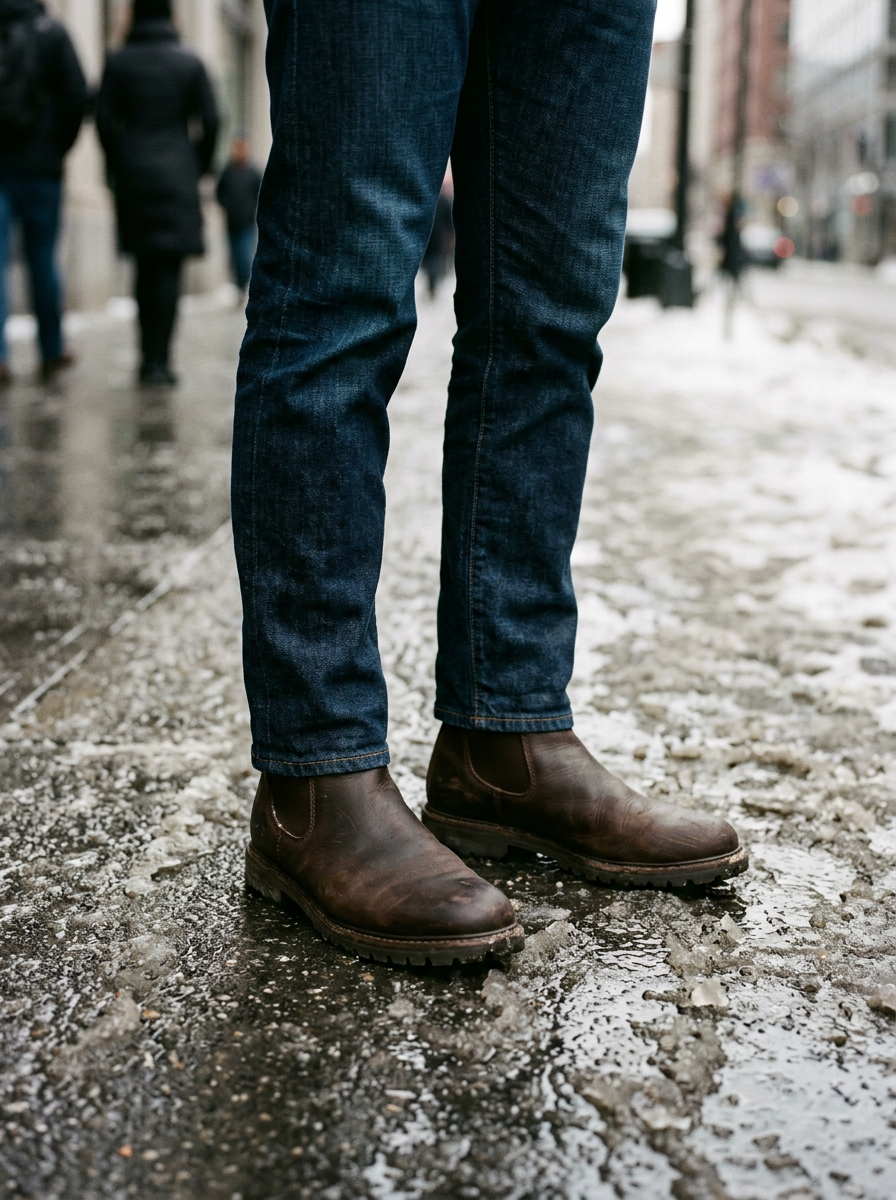
How to wear them with normal clothes
Dark brown is the safe color. It works with indigo denim, olive, gray and navy, which covers most winter closets. Black is the better call if you wear a lot of black and charcoal already.
Your jeans decide whether this looks intentional. Straight and relaxed legs fall over the top of a boot and sit clean, with one small break at the hem. Skinny jeans bunch up at the top of the shaft and make your calves look like they're fighting something. If you're not sure what your pairs are doing, the jeans guide sorts it out. Don't tuck your pants in unless you're actually walking through a foot of snow.
Think about the top half too. A chunky boot under a thin bomber looks bottom heavy. Boots this size want a parka or a wool topcoat with some weight to it, and we sorted those out in the winter coat guide.
Socks matter more than people admit. Merino holds warmth when it's damp and cotton doesn't, so buy two pairs from Darn Tough or Smartwool at $20 to $30 each. Try the boots on with those socks, and make sure you can wiggle your toes. A tight boot is a cold boot, since it squeezes the insulation flat and slows blood flow to your feet.
Salt is what kills them
Those white lines do real damage. Road salt pulls the oils out of leather until it cracks, usually around the toe crease, and that damage doesn't come back.
Mix equal parts white vinegar and water, wipe the lines off with a cloth, then go over it once with a plain damp cloth. Stuff the boots with newspaper and let them dry at room temperature. Never put them on a radiator or a heater, because fast heat will crack leather quicker than the salt did. Condition them twice a winter, and give them a day off between wears if you can.
One last thing: wear new boots around the house for two evenings, with the socks you plan to use, before they touch a sidewalk. A pair with clean soles can still go back.