Winter coats for men: puffer, parka, or wool topcoat
Three kinds of winter coat, three different jobs. Here's how to pick the one that fits your city, your commute and the rest of your closet.
October 28, 2026 · 5 min read
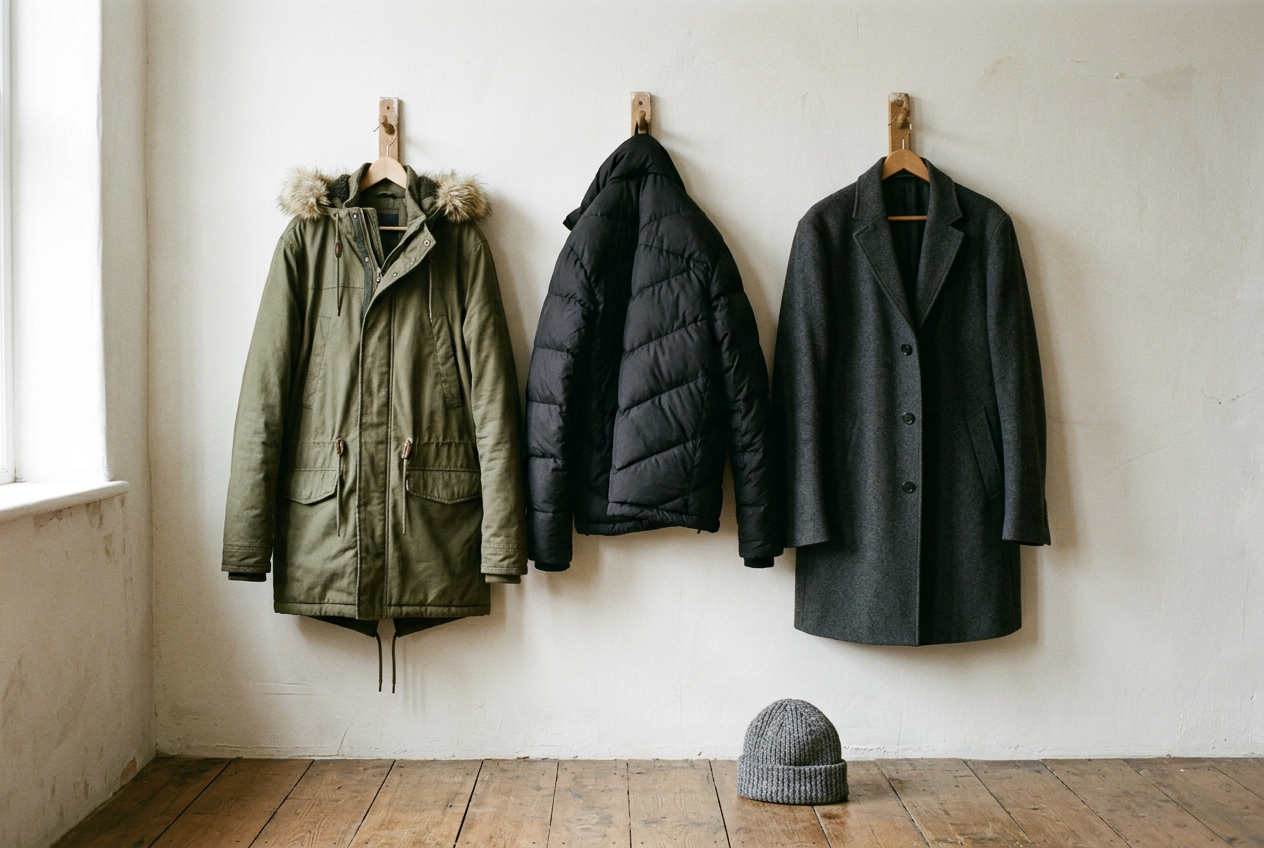
Your fall jacket has a ceiling. Somewhere around 40 degrees, the chore coat or trucker you've been living in since September stops working, and you start stacking hoodies under it like a kid in a snowsuit. That's the signal. You need an actual winter coat, and you only need one.
The problem is that "winter coat" covers three very different things: the puffer, the parka, and the wool topcoat. They solve different problems, they look different with the rest of your clothes, and buying the wrong one for your city means you either freeze or sweat through every train ride. Here's how to pick.
Start with your winter, not the coat
Be honest about what January looks like where you live. A coat for Atlanta and a coat for Minneapolis are not the same purchase.
If your coldest days sit in the 30s and you mostly go from car to building, a wool topcoat is plenty. Layer a sweater under it and you're fine. If you regularly see the teens, walk to class or the train, and deal with wind or wet snow, you want insulation and a shell: a puffer or a parka. And if you're somewhere that hits single digits for weeks at a time, get the parka and stop negotiating with yourself.
One more question: what do you wear most days? Hoodies, joggers and sneakers lean puffer. Chinos, knits and boots can go any direction. If you wear a suit or dress pants even twice a week, you'll want a topcoat eventually, because a parka over tailoring looks like you're heading to a job site.
The puffer: warmest for the money
A good puffer is the most warmth per dollar you can buy, and it's the easiest to wear with casual clothes. Two numbers matter. Fill power (600 is decent, 700 to 800 is great) tells you how lofty the down is. Fill weight tells you how much is actually in there, and most brands bury it, which is why an 800 fill "ultra light" jacket can still be cold.
What to buy: Uniqlo's seamless down parka runs around $150 and handles most cities. For harder winters, the Patagonia Down Sweater is about $280 but it's more of a layer; the North Face Nuptse (around $330) is the real step up in warmth. Synthetic fill like PrimaLoft is fine if you live somewhere wet, since down clumps when it soaks through.
Fit matters more than people think. A puffer should end at the hip or just below it, and the sleeves should cover your wrist bone with your arms out in front of you. Go too boxy and too short and you get the marshmallow look. If you're on the shorter side, avoid the cropped styles; they cut you in half.
The parka: for real cold and real walking
A parka is longer, usually hits mid thigh, and almost always has a hood. That extra length is the whole point: it keeps your hips and the top of your legs warm, which is where a short puffer leaves you exposed when you're standing at a bus stop for 15 minutes.
Look for a shell that blocks wind (a lot of cheap parkas are basically polyester tents), a two-way zipper so you can sit down, and a hood that actually fits over a beanie. Speaking of which, the hat and gloves do a surprising amount of the work here, so read the cold weather accessories guide before you overspend on the coat itself.
Price range is wide. Columbia and L.L.Bean sell parkas rated for single digits at $200 to $300. Canada Goose is $1,000 plus and you're mostly paying for the patch. Fjällräven and Arc'teryx sit in between. Stick to olive, navy, black or charcoal. A bright parka is fun for one winter and loud for the next four.
The wool topcoat: the one that goes with everything
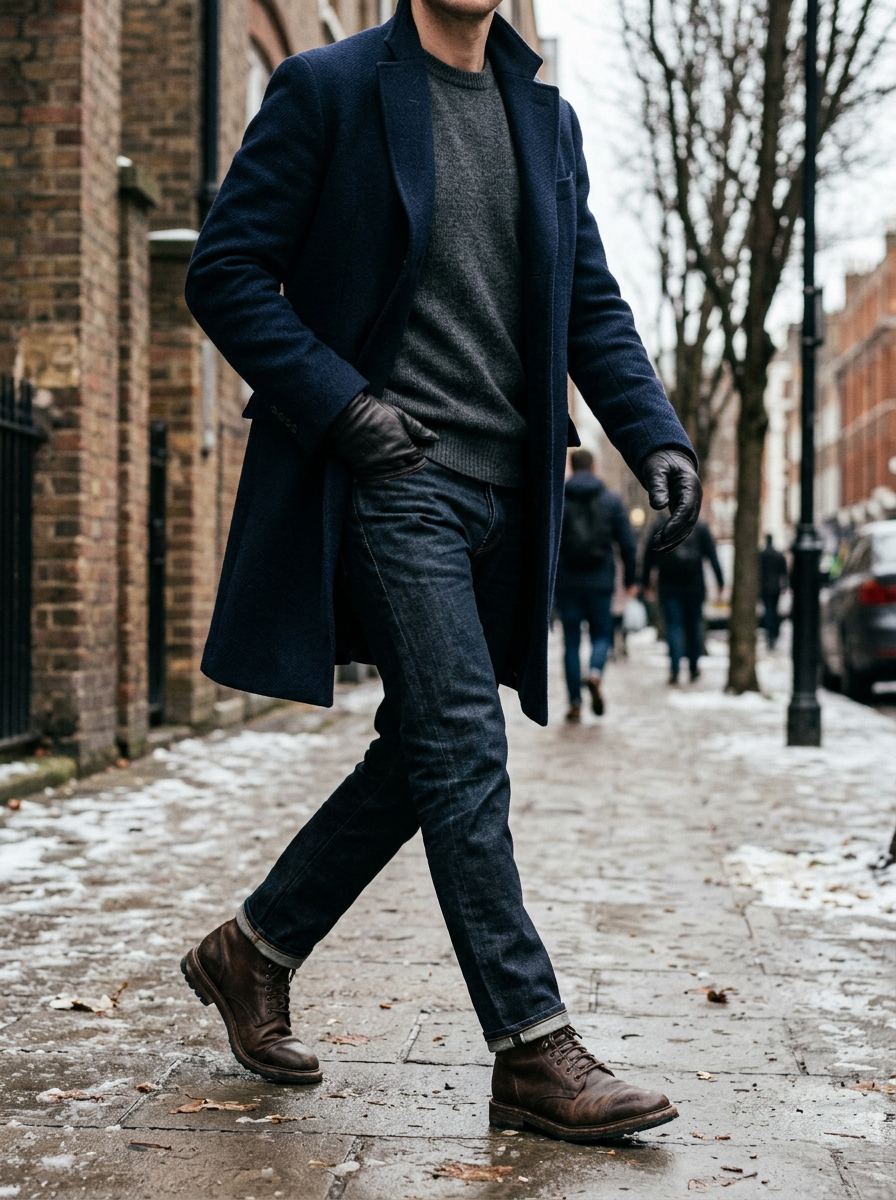
A topcoat is the dressiest of the three, and it's also the most flexible, which surprises people. Over a suit, obviously. But also over a hoodie and jeans, which is one of the easiest ways to look put together in winter without trying very hard.
The fabric spec is what separates a $120 coat from a $350 one. Look at the tag: you want at least 70% wool. Anything under 50% wool is mostly polyester and it'll pill, shine and hold about as much heat as a windbreaker. If you want more on fiber quality, the sweater guide covers how wool grades work, and the same logic applies here.
Length: just above the knee is the classic, and it works on most guys. Mid thigh reads more casual and is better if you're under 5'9". Shoulders should sit at your actual shoulder with room for a sweater underneath, so size up only if a medium-weight knit won't fit. Charcoal or camel first. Navy third.
Good options: J.Crew's Ludlow topcoat often goes on sale around $250 to $300. Uniqlo's wool blend chesterfield is about $150 and the best value under $200. Thrift stores are full of real wool coats in the $30 to $60 range, and that's honestly where a lot of the best ones are.
So which one?
If you're still stuck, use this:
- Mild winters, dresses business casual or better: wool topcoat
- Cold winters, mostly casual, short commutes: puffer
- Brutal winters, lots of walking or waiting outside: parka
- You can only afford one and you're not sure: puffer, then add a topcoat next year
Most people end up with two eventually: something technical for the worst weeks and a topcoat for everything else. But don't buy both at once. Wear one for a full winter and you'll know exactly what the second one needs to fix.
Last thing: buy now or wait until January. Coats are full price from October through mid December, and almost every brand marks outerwear down 30 to 50% after the holidays. If your fall jacket still covers you, layer up for the in between days and let the sale come to you.