Merino, lambswool, cashmere: which sweater to actually buy
Wool is not one material. The gap between a $50 merino and a $300 cashmere is measurable, and it decides which sweater survives the winter.
September 16, 2026 · 4 min read
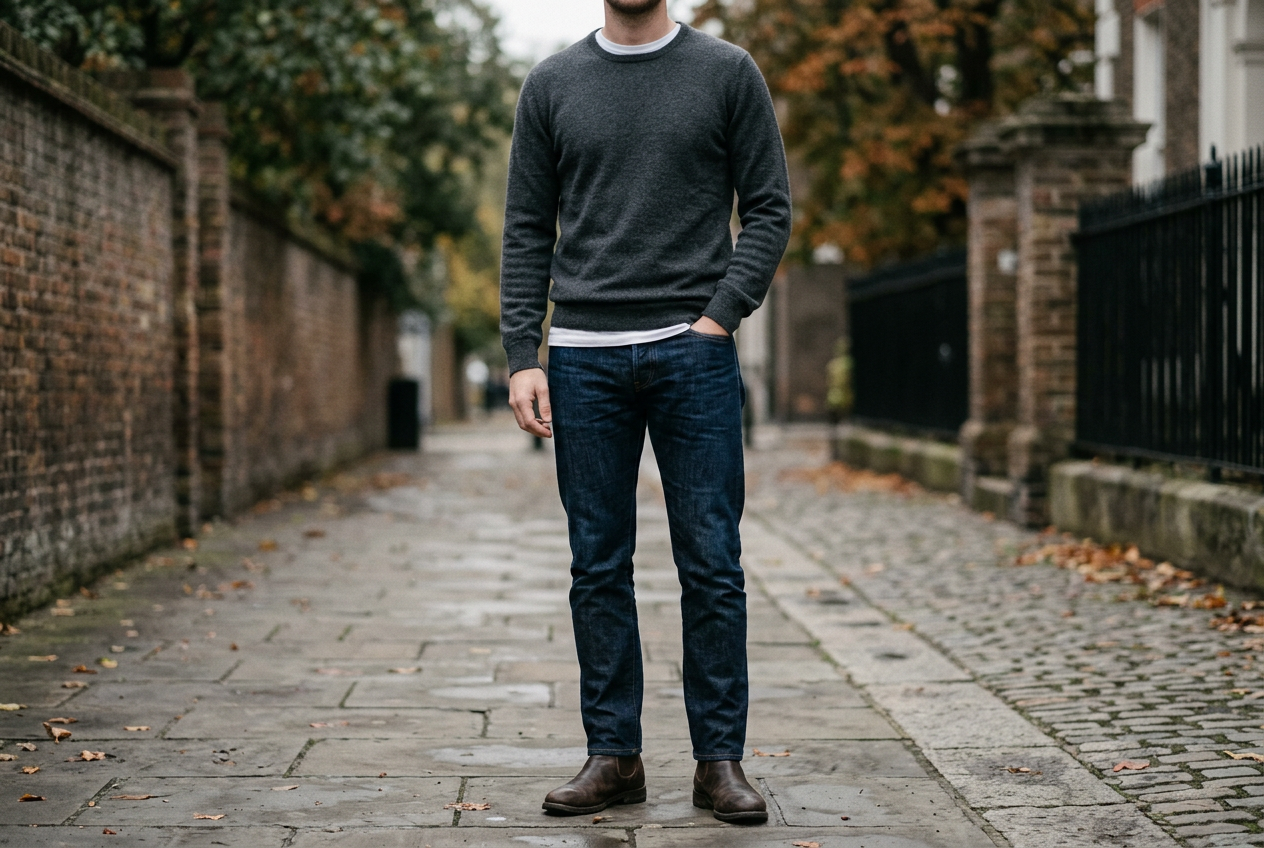
September is when the sweater question comes back. You pull out whatever knit survived last year, notice it has pilled into something fuzzy and tired, and start wondering whether a $180 merino crewneck is a scam or the only honest thing you will buy all fall.
The answer depends entirely on the fiber. Wool is not one material. The word covers a $29 acrylic blend that makes your neck itch and a $300 cashmere that feels like nothing at all. Once you can read a fiber tag, the prices stop being mysterious.
Merino is the one to buy first
Merino comes from Merino sheep, and the number that matters is fiber diameter, measured in microns. Generic wool runs 25 microns and up, thick enough that you feel individual fibers against your skin. That is the itch. Merino sits between 17 and 21. Below 19, most people feel nothing.
Merino also handles temperature swings and resists odor in a way cotton does not. A merino crewneck goes three or four wears between washes, which matters, because washing is what kills knitwear. Uniqlo's extra fine merino is around $50 and is genuinely 19.5 micron wool. J.Crew and Everlane land near $100 to $130. Past $150 you are paying for denser knitting, longer fibers and better finishing, not a different animal.
Start with a crewneck in navy, charcoal or oatmeal. It works under a jacket, over a white tee, with jeans or chinos.
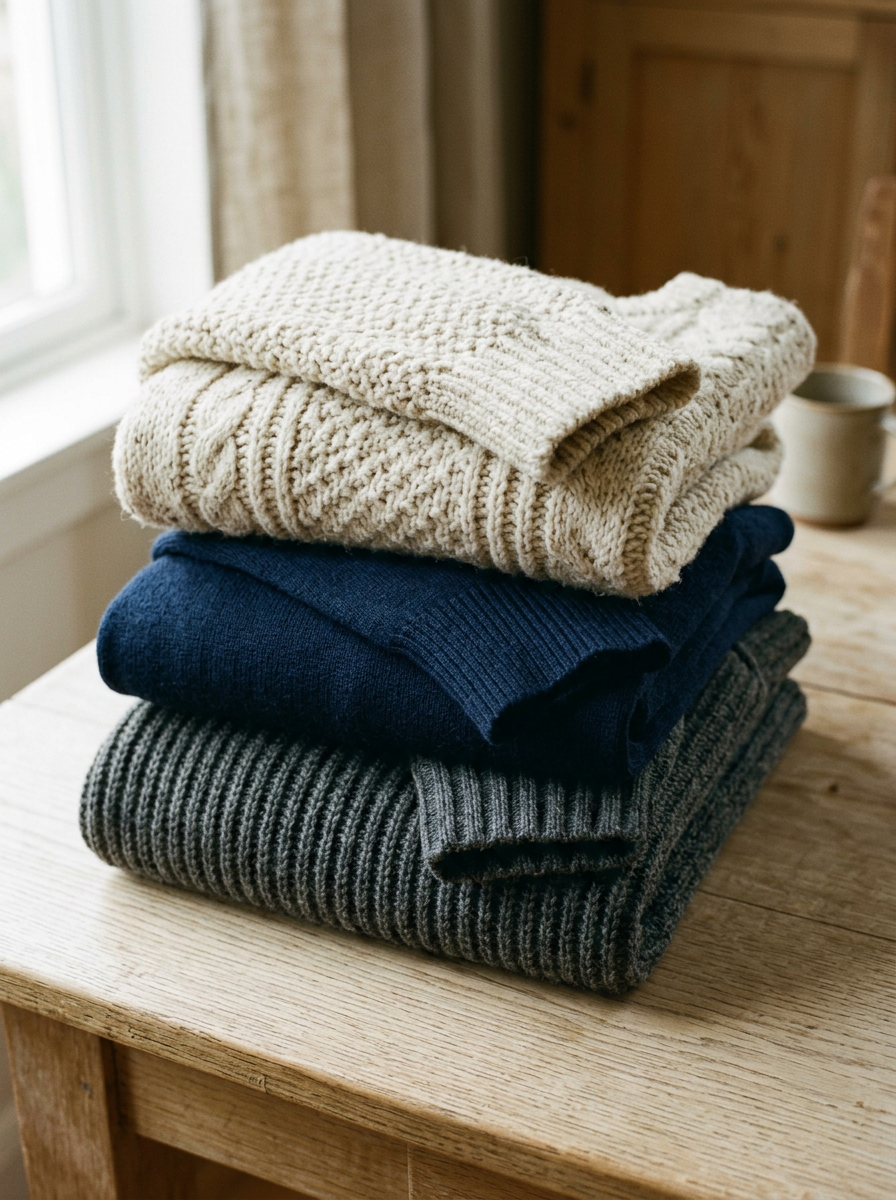
Lambswool is the workhorse
Lambswool is the first shearing from a sheep under seven months old. Softer than adult wool, stronger than merino, usually half the price of it. It knits up thicker and fuzzier, with the loft people picture when they say "fall sweater."
Lambswool wins on durability. A good one at $80 to $120 will outlast three merinos, because the fiber is stronger and the looser knit takes abrasion better. It loses next to skin: most people want a tee underneath. Shetland is its rougher relative, tougher still, and worth owning once you already have something soft.
Cashmere is the second sweater, not the first
Cashmere is goat undercoat, 14 to 19 microns, roughly three times warmer than sheep wool by weight and softer than anything else you will put on. It is also fragile. Short fine fibers pill fast and snag on a seatbelt buckle.
Here is the trap. Cheap cashmere is real cashmere, just made from short scraps spun thin. A $90 cashmere sweater is not fake, it is simply built to fall apart, and it will look like a tennis ball by December. If you want cashmere, the floor is about $200 for two ply from a brand willing to print the ply count. Otherwise put the $90 into lambswool and be happier in March.
Read the tag before you read the price
- 100% merino at 19.5 micron or finer: next to skin, layering, travel.
- Lambswool, or lambswool cut with a little nylon: the daily sweater, worn over a tee.
- Cotton knit: warm offices, shoulder season, anyone who hates wool on principle.
- Over 30% acrylic: skip it, unless it costs $40 and you accept one winter of use.
- "Cashmere blend" under $120: usually 10% to 30% cashmere for the label, with the other fibers doing the work.
Knitwear fit has its own rules
Shoulder seam on your shoulder bone. Sleeve ending at your wrist bone, with enough length to push up. Hem covering your belt and stopping an inch or two below it. If it covers your fly, it reads as borrowed. Those are the same checks as the rest of your closet, which you can find in how clothes should fit.
The part people get wrong is movement. Knits relax with wear and tighten back up in the wash, so buy close to the body and let it settle. A sweater bought roomy only gets roomier. You want a couple of inches through the chest, enough for a tee, not so much that it bunches under a fall jacket. If it pulls when you cross your arms, size up. If it hangs in vertical folds at your ribs, size down.
Care is most of the value
Wash wool less. Air a sweater out overnight and the smell goes, because the fiber is doing its job. When it does need washing: cold water, wool detergent, dry flat. The dryer is what turns a men's medium into a toddler's sweater, which is the same story as making your clothes last.
Buy a sweater comb or a fabric shaver for about $12. Pilling is normal on lambswool and guaranteed on cashmere, and shaving it off twice a season keeps a sweater looking two years younger than it is. Fold knits. Never hang them, because hangers pull the shoulders into little points that no wash will fix.
Go check the tag on last year's sweater tonight. If it says acrylic and you spent all winter cold, that was not you.